View online
Welcome to PLASTICE newsletter #17

What happens to the plastic that no recycling line will take? It is mixed, contaminated or blended with other fibres, and most of it still ends up in landfill or incineration, taking its carbon with it. As new EU rules demand more recycled content in packaging, finding a second life for this fraction is becoming urgent.

This issue shows PLASTICE solutions gaining ground:

  • In the EU's first report on innovative techniques: the Joint Research Centre features four PLASTICE technologies as routes to turn waste into feedstock for the chemical industry.
  • A fabric made from 100% recycled polyester: our partners have knitted the first samples, which came through dyeing at 130 °C without shrinking.
  • New reactors for microwave pyrolysis: new designs are bringing the Zaragoza demosite closer to full operation.
  • How green is my bottle? A journalistic feature asks whether "recycled content" labels can be trusted, and how traceability could help.
  • From Europe to India: where PLASTICE textile recycling solutions could make a difference next.

Scroll down for the full stories, and save the dates for our webinars on 30 September and 30 October.

Latest news
Structure_Expansion
Three technologies for hard-to-recycle plastic waste featured in the EU’s first Technical Report on Innovative Techniques
The Joint Research Centre's first Technical Report on Innovative Techniques features four PLASTICE technologies for mixed, contaminated waste that mechanical recycling cannot handle. The four routes are hydrothermal liquefaction, microwave-assisted pyrolysis, gasification with chemical post-treatment and cascade enzymatic hydrolysis for textile blends. The report is a first step for techniques that could later inform the EU's Best Available Techniques.
Read more
Screenshot 2026-09-23 174341
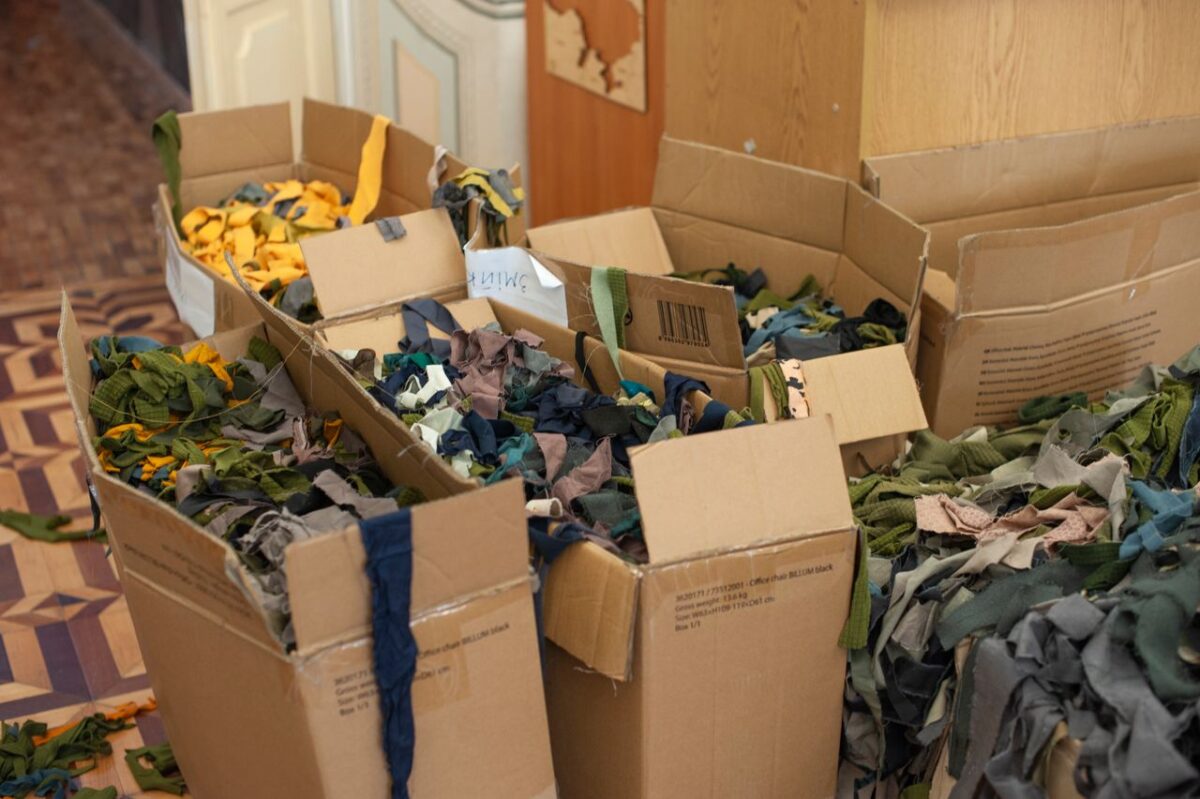
First fabric successfully made from 100% recycled polyester yarns
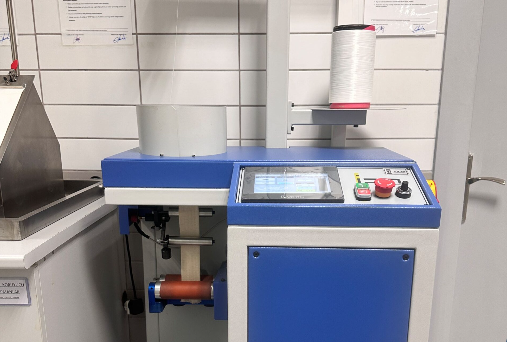
Sun Tekstil has knitted the first fabric samples from 100% recycled polyester yarns produced by KORTEKS. The fabrics came through dyeing at 130 °C with good colour uptake and no significant shrinkage. They can also be processed on conventional textile machinery, a key advantage for industry. Pilot-scale production is the next step.
Read more
imagen
The microwave-assisted pyrolysis demosite at CIRCE moves forward
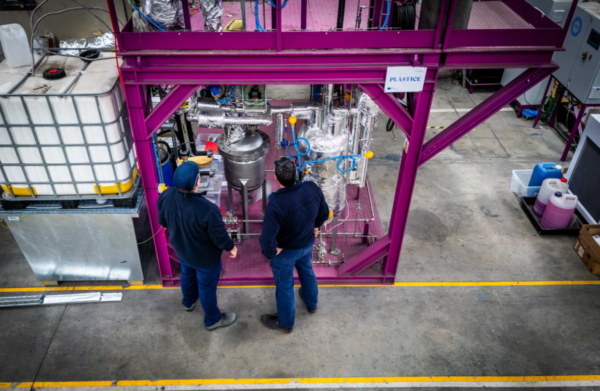
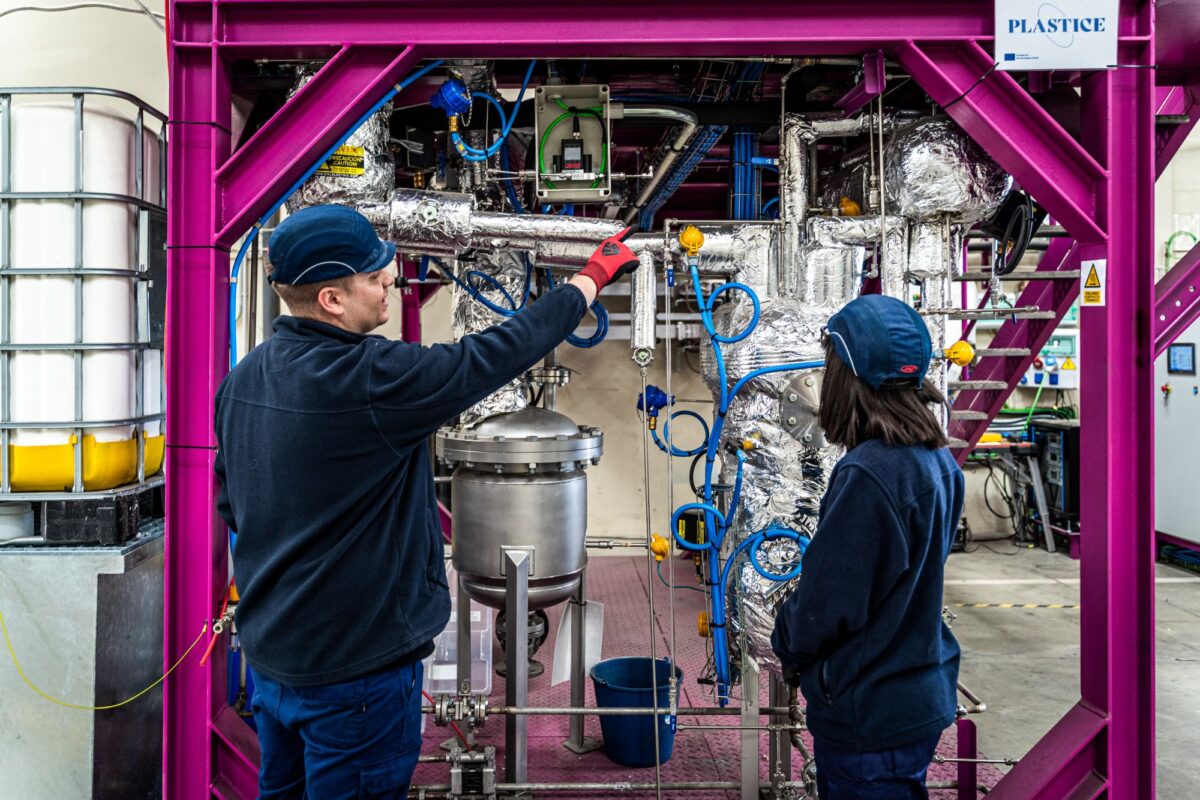
At CIRCE in Zaragoza, work continues to bring the microwave pyrolysis demosite to full operation. Together with reactor supplier CEINNMAT, the team is developing and testing new reactor designs to make the microwave heating system more stable and reliable. The most robust and scalable design will then be installed and commissioned on site.
Read more
foto_2026_0203_oratorio-alfajarin_equipo_pyroball-horno-microondas-industrial-planta-piloto_servicio_valorización-residuos_proyecto_plastice-08501 (1)
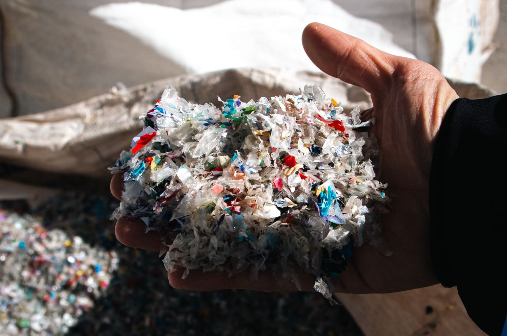
How green is my bottle? Inside Europe's plastic recycling maze
EU rules now require more recycled content in plastic packaging, but consumers still cannot tell whether a given bottle contains any. Journalist Gioia Salvatori looks at mass balance, the debate on chemical recycling and the blockchain-based traceability platform PLASTICE is developing. The article features voices from the project, Fundación CTIC and Zero Waste Europe.
Read more
pexels-algrey-11496283
From Europe to India: PLASTICE at ECOSYSTEX Insights Series #24
India generates about 7 million tonnes of textile waste a year, and much of the blended fraction is still downcycled. At the ECOSYSTEX Insights Series on 10 September, Rocio Renna (RINA Consulting) presented how PLASTICE's enzymatic recycling of cotton–polyester blends could apply to the Indian textile sector.
Read more
Upcoming events
Screenshot 2026-09-23 174325
Webinar "Advanced recycling for circular feedstocks" – 30 September 2026, 10:00–11:30 CEST
PLASTICE joins Plastics2Olefins and SOLSTICE at this Polymeris webinar. There will be three technology presentations, followed by a workshop on scale-up challenges.
Register here
pexels-mikhail-nilov-9243553 (1)
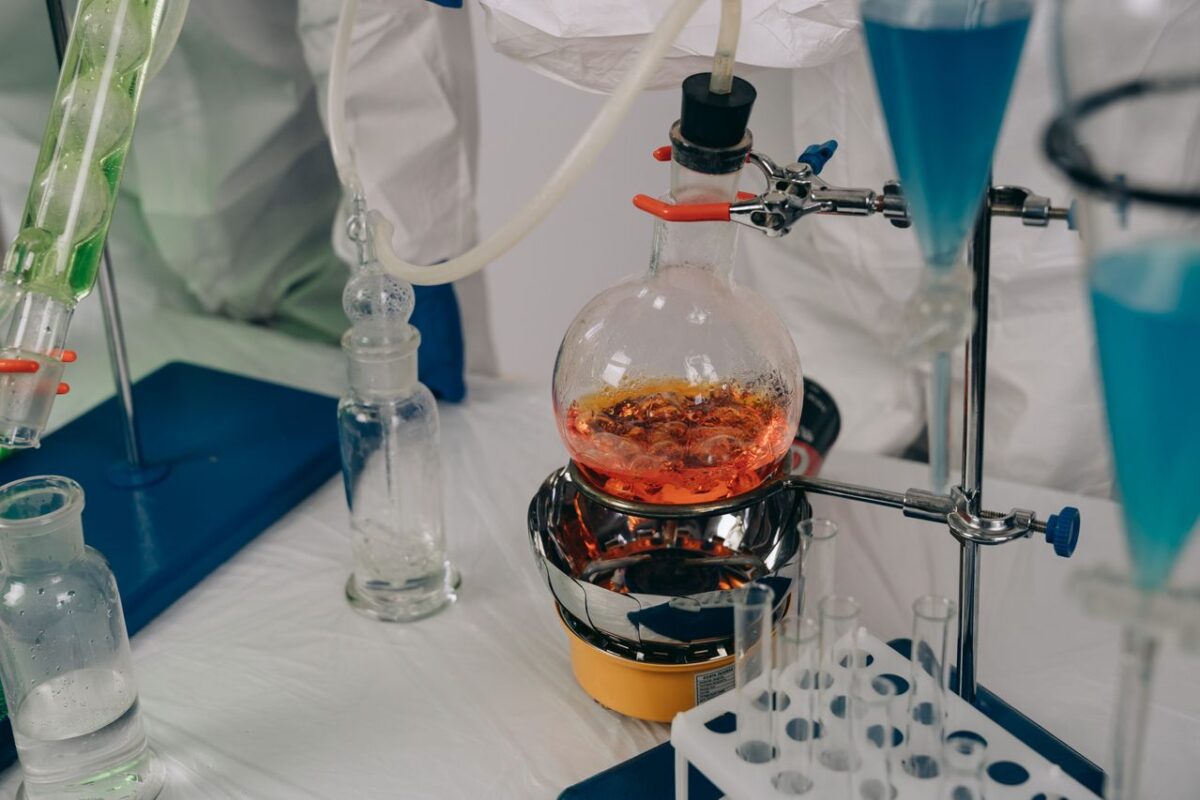
EFCE Spotlight Talk "Chemical Recycling of Plastics" – 30 October 2026, 14:00–16:15 CET
Researchers from CIRCE and the University of Amsterdam will present PLASTICE's work on microwave-assisted pyrolysis and hydrothermal liquefaction.
Register here
facebook  linkedin  youtube