The three technologies have been pioneered as part of an EU innovation project – PLASTICE – to develop various methods for integrating plastic waste into the circular economy. The technologies have been feature in the EU Joint Research Centre‘s first Technical Report on Innovative Techniques. The report was published by INCITE — the EU Innovation Centre for Industrial Transformation and Emissions, established under the revised Industrial Emissions Directive. It identifies “waste as feedstock” as an emerging pathway for the chemical sector, one that, in its words, stops “viewing waste as an environmental burden” and redefines it as “a valuable carbon and hydrogen source for the synthesis of fuels, chemicals and materials”.
The obstacle is that the waste in question is the difficult kind. Mixed, contaminated, hard to sort — the fraction that mechanical recycling cannot process and that ends up in landfill or incineration. Converting it requires processes robust enough to handle heterogeneous inputs and still deliver material of consistent quality.
This is the problem PLASTICE was set up to address, and three of its technologies are among the demonstrators showcased in the report — a selection made, INCITE states, on the basis of relevance:
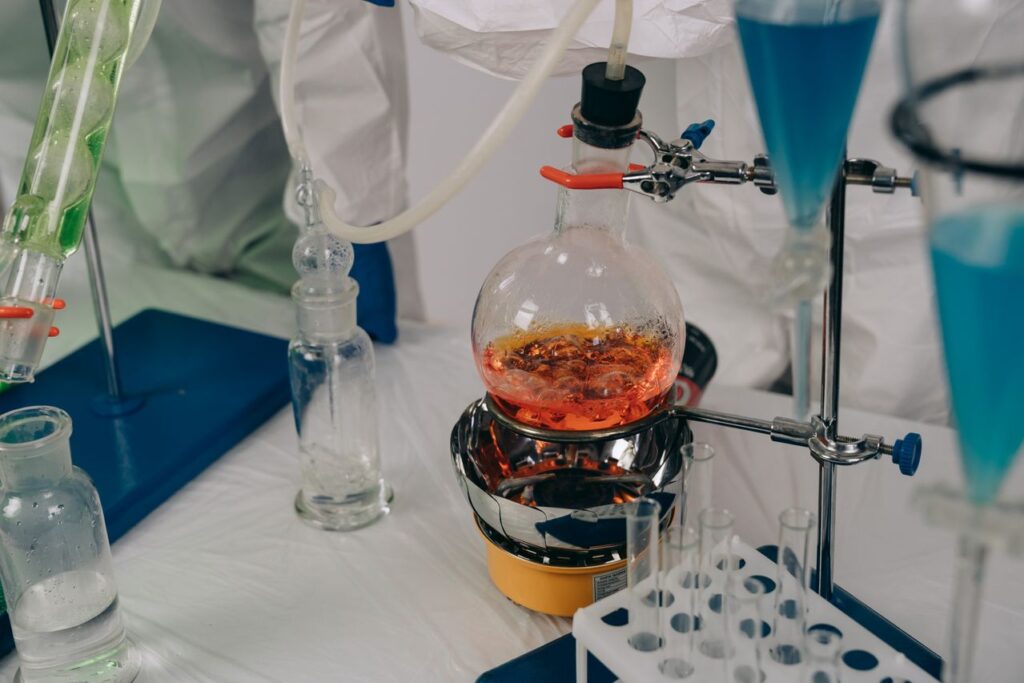
- Hydrothermal liquefaction (HTL) converts plastic waste into a synthetic crude oil by treating it in water at high pressure and temperature, without drying the feedstock first — in effect reproducing in a short time what produced fossil fuels over geological ones. It handles HDPE- and LDPE-rich waste and solid recovered fuel mixed with paper and textiles, yielding oil that can be refined into chemical building blocks, combustible gases, and char usable as an adsorbent in wastewater treatment. Pilot-scale validation runs at COGERSA in Asturias, with the University of Amsterdam providing the scientific expertise. Being a non-combustion process, the report notes, it may meet fewer social barriers than the alternatives.
- Microwave-assisted pyrolysis uses microwaves to heat catalysts and plastics directly, so that polymers break down quickly and uniformly and with higher energy efficiency than conventional heating. It takes the unsortable mix of polyethylene, polypropylene and polystyrene — including the black plastics invisible to optical sorting — and produces pyrolytic oil, combustible gas and carbon. Because the heating is electric, the process can run on renewable power. It is validated at the industrial laboratory of CIRCE – Technology Centre in Zaragoza, as a continuous process.
- Gasification with chemical post-treatment converts plastic residues into syngas at high temperature with a limited supply of oxygen, then transforms the syngas catalytically into olefins by way of dimethyl ether — the building blocks of circular plastics, obtained from heterogeneous solid recovered fuel. The development of the gasification pilot is led by RINA-CSM, with the contribution of Chemical Empowering , and CNR contributing the catalysts for syngas upgrading.
Three routes, three feedstocks, three points in the value chain — and one objective: keeping difficult plastic waste inside the materials loop instead of burning or burying it.
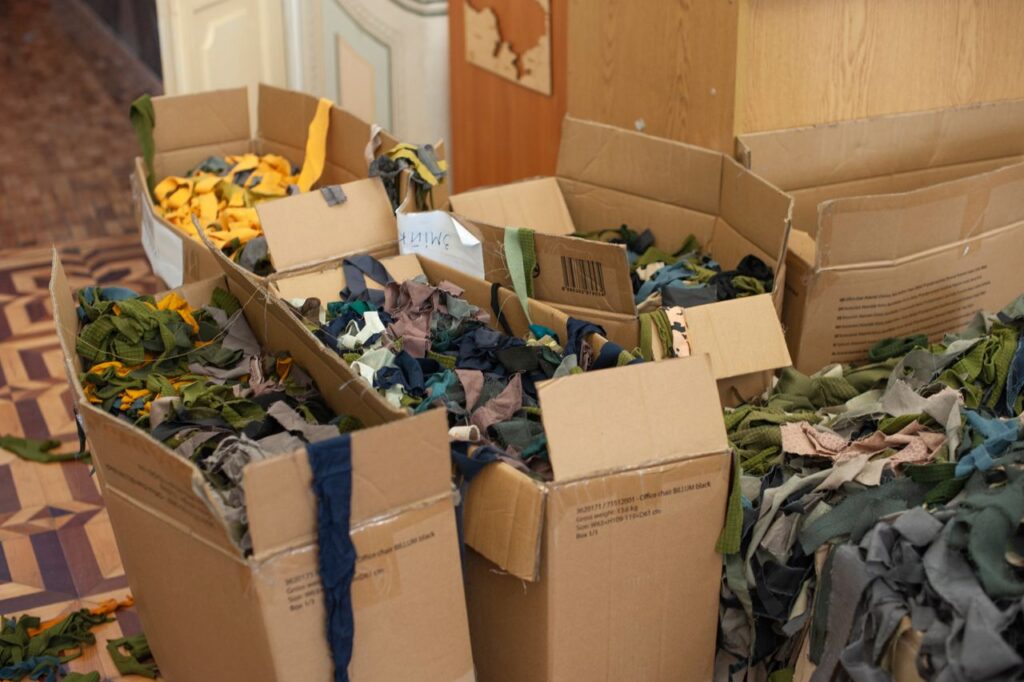
A fourth PLASTICE technology extends the same logic to textiles. Cascade enzymatic hydrolysis applies engineered enzymes in sequence to depolymerise mixed polyester–cotton waste, recovering clean polyester fibres and monomers from cotton that can be reused without loss of quality.
Only a fifth of Europe’s plastic waste is recycled today. What these technologies are working on is the rest — the mixed, the contaminated, the unsortable — and the carbon locked inside it, which the chemical industry needs and currently digs out of the ground instead.
Read the full report ->The INCITE Technical Report on Innovative Techniques is published by the Publications Office of the European Union and is free to download. The PLASTICE technologies are described in the chapter on waste as feedstock in the chemical sector.
Photo credits: PLASTICE consortium